What Size Wire for 15 to 100 Amps? A Breaker-by-Breaker Chart
The breaker protects the wire, so the wire has to be big enough for the breaker. Here is what size wire each common breaker needs, in copper and aluminum, and the three situations where you have to go bigger.
Quick answer
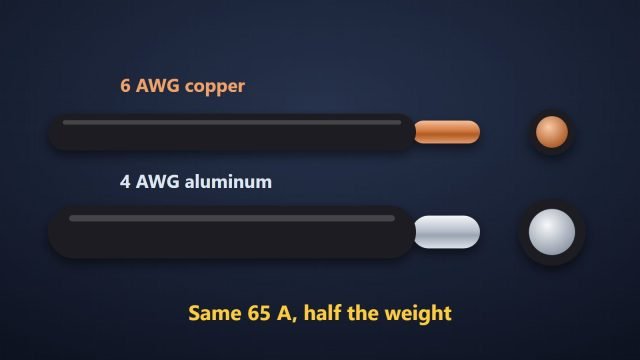
| Breaker | Copper NM-B (60°C) | Copper THHN in conduit (75°C) | Aluminum (75°C) | Typical use |
|---|---|---|---|---|
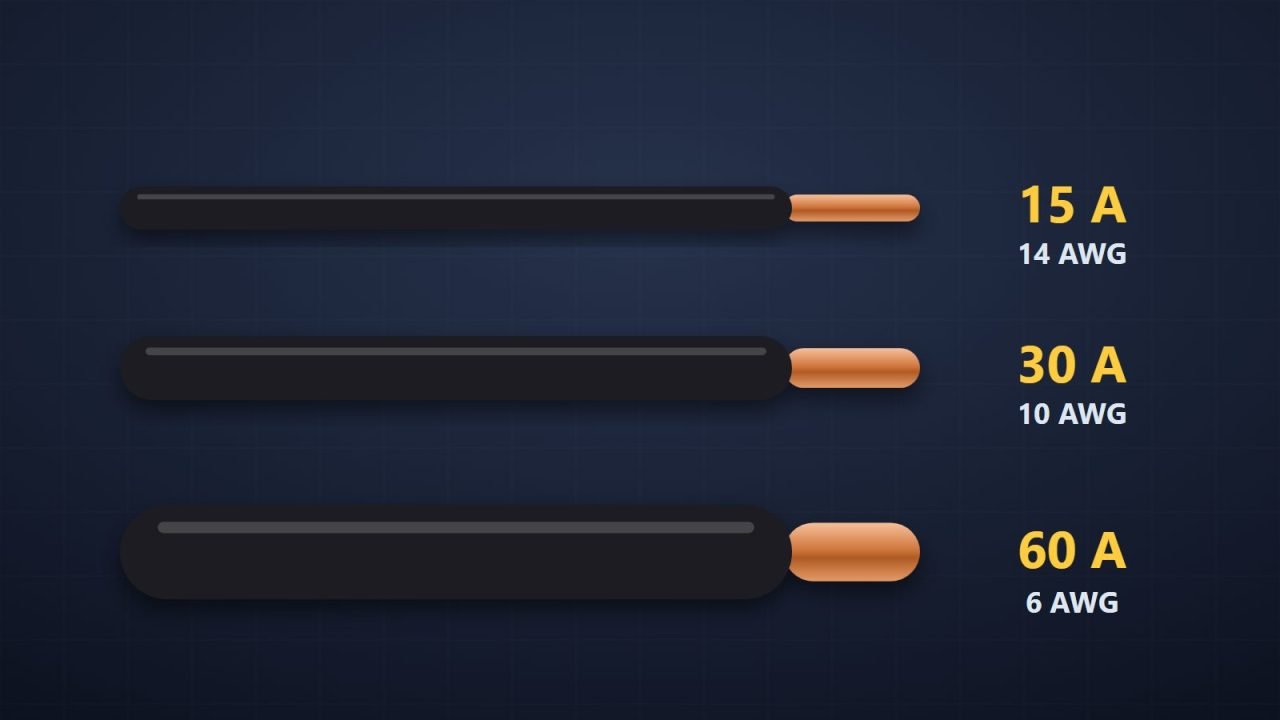
| 15 A | 14 AWG | 14 AWG | 12 AWG | Lighting, general outlets |
| 20 A | 12 AWG | 12 AWG | 10 AWG | Kitchen, bathroom, laundry outlets |
| 30 A | 10 AWG | 10 AWG | 8 AWG | Dryer, water heater |
| 40 A | 8 AWG | 8 AWG | 8 AWG | Cooktop, small range |
| 50 A | 6 AWG | 8 AWG | 6 AWG | Range, EV charger, welder |
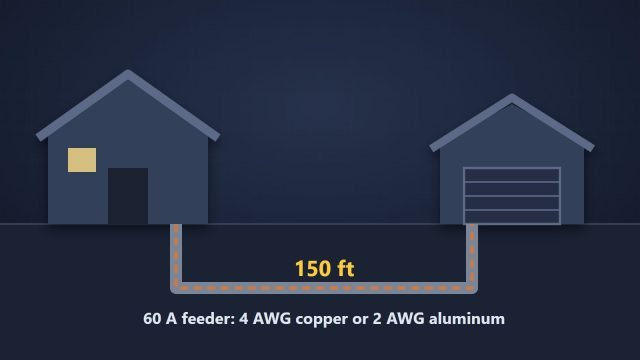
| 60 A | 4 AWG | 6 AWG | 4 AWG | Subpanel, tankless heater |
| 100 A | 1 AWG | 3 AWG | 1 AWG | Subpanel or feeder |
These are minimums for runs short enough that voltage drop is not a problem. Check your own circuit with the wire size calculator.
Where the numbers come from
Each size is the smallest wire whose ampacity in NEC Table 310.16 is at least the breaker rating, in the right temperature column:
- NM-B cable (Romex), the usual house wiring, is always sized at 60°C, even though the wires inside are rated 90°C.
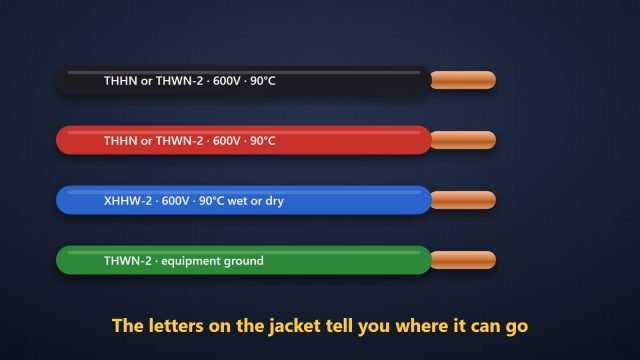
- Individual wires in conduit (THHN/THWN-2) may use 75°C when the breaker and the equipment terminals are rated 75°C. Most modern breakers are marked 60/75°C.
- 14, 12 and 10 AWG also have fixed breaker limits (NEC 240.4(D)): 15, 20 and 30 A in copper, 15 and 25 A for 12 and 10 AWG aluminum.
That is why 50 A takes 6 AWG copper in NM-B (8 AWG is only 40 A at 60°C) but can use 8 AWG THHN in conduit (50 A at 75°C). See the full wire ampacity chart.
When you need a bigger wire
1. Long runs
Every foot of wire adds resistance. A 20 A load 100 ft away on 12 AWG loses 6.6% of 120 V, enough to dim lights and strain motors. To stay under the recommended 3%, that run needs 8 AWG. Check any run with the voltage drop calculator.
2. Continuous loads
Loads that run for three hours or more, such as EV chargers, electric heat and water heaters, must be sized at 125% of their current. A 40 A EV charger therefore needs a 50 A circuit and wire rated for 50 A.
3. Heat and crowding
Wire in a hot attic or with more than three current-carrying wires in one conduit carries less current. The correction can push you up one or two sizes. The ampacity calculator applies the factors.
Equipment with a nameplate
Air conditioners, heat pumps and other motor equipment list a minimum circuit ampacity (MCA) and a maximum breaker size (MOP). Size the wire from the MCA, not from the breaker. A unit with MCA 18 A and MOP 30 A can use 12 AWG copper on a 30 A breaker, which looks wrong but is allowed for motor loads.
The ground and the neutral
The neutral of a branch circuit is normally the same size as the hots. The equipment ground can be smaller, from NEC Table 250.122: 14 AWG copper for 15 A, 12 for 20 A, 10 for up to 60 A and 8 for up to 100 A.
Frequently asked questions
Can I put 12 gauge wire on a 15 amp breaker?
Yes. A bigger wire on a smaller breaker is always allowed. The reverse, 14 AWG on a 20 A breaker, is a fire risk and never allowed.
Is 10 gauge enough for 40 amps?
No, not for general circuits. 10 AWG copper is limited to a 30 A breaker. 40 A needs 8 AWG copper.
What size wire for a 200 amp service?
For a dwelling service, NEC 310.12 allows 2/0 copper or 4/0 aluminum. Other 200 A feeders need 3/0 copper or 250 kcmil aluminum at 75°C.