Wire Size for a Detached Garage, Shop or Shed
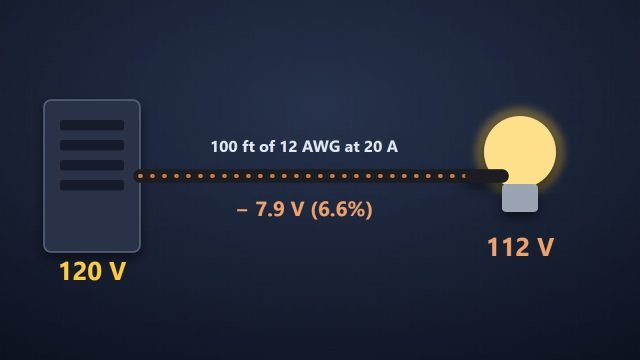
Running power to a detached garage, workshop or shed is one of the most common jobs where the usual wire chart gives the wrong answer. The run is long, so voltage drop, not ampacity, often decides the wire size for a detached garage. Here is how to work it out.
Step 1: decide what you need out there
- Lights and a few outlets: one 20 A, 120 V circuit is enough.
- Power tools, a compressor or a heater: a 240 V feeder to a small subpanel, usually 40 to 60 A.
- A welder, an EV charger or a full workshop: a 100 A feeder or more.
Feeding a subpanel is usually the better choice: you can add circuits later without digging again.
Step 2: size the wire for the current
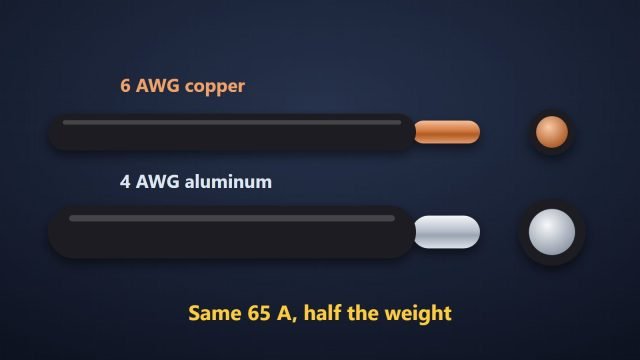
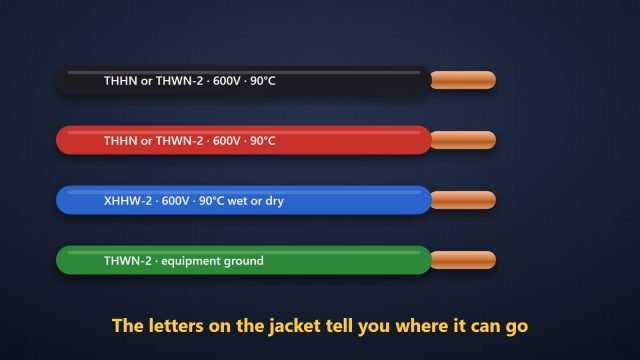
Underground feeders are usually individual THWN-2 wires in conduit, or direct-burial cable rated 75°C, so the 75°C column applies: 6 AWG copper or 4 AWG aluminum for 60 A, 3 AWG copper or 1 AWG aluminum for 100 A.
Step 3: check the voltage drop
This is the step people skip. Three examples, at the full breaker current:
| Feeder | Distance | Size for the current | Drop | Size for 3% drop |
|---|---|---|---|---|
| 20 A, 120 V circuit | 75 ft | 12 AWG copper | 5.0% | 8 AWG copper |
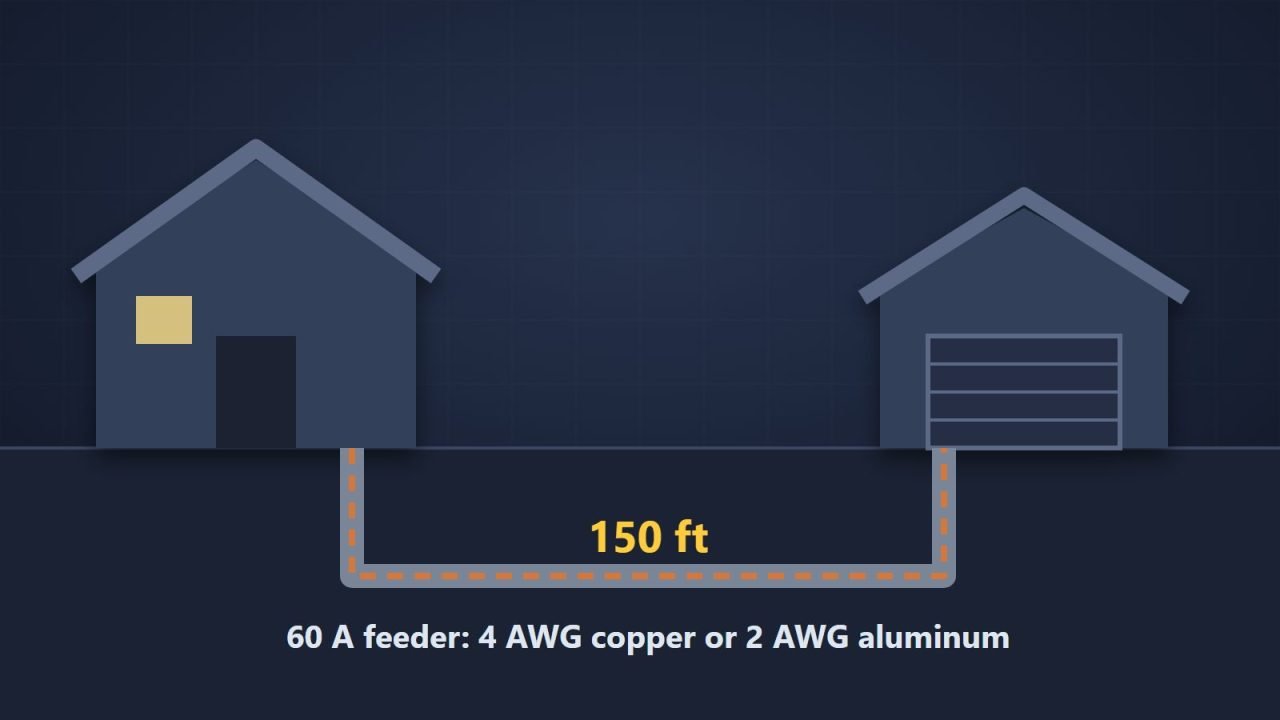
| 60 A, 240 V subpanel | 150 ft | 6 AWG copper | 3.7% | 4 AWG copper or 2 AWG aluminum |
| 100 A, 240 V subpanel | 200 ft | 3 AWG copper | 4.1% | 1 AWG copper or 2/0 aluminum |
A 20 A circuit at 240 V instead of 120 V halves the current for the same power and cuts the percent drop to a quarter, which is one reason to feed a subpanel. Try your own numbers in the wire size calculator.
These figures assume the full breaker current, which is the cautious approach. If your real load is much lower, the drop is lower in proportion, but sizing for the full breaker leaves room to grow.
Step 4: copper or aluminum?
For long feeders, aluminum is usually the better buy. Aluminum feeder cable such as 2-2-2-4 URD costs far less than the copper equivalent, and the voltage drop of the two equivalent sizes is almost the same. Use lugs marked AL/CU and torque them to the panel maker’s value. See copper vs aluminum wire.
Rules for outbuilding feeders
- Four wires: a 240 V feeder to a subpanel needs two hots, a neutral and a separate equipment ground (NEC 250.32). In the garage panel, keep the neutrals and grounds on separate bars and remove the bonding screw.
- Grounding electrode: a building with a subpanel needs its own ground rods, connected to the ground bar.
- Disconnect: the garage needs a disconnect where the feeder enters. The subpanel’s main breaker can be it.
- One feeder: normally only one feeder or branch circuit may supply a detached building (NEC 225.30).
- GFCI: garage and outdoor receptacles need GFCI protection.
Burial depth
| Method | Minimum cover |
|---|---|
| Direct-burial cable (UF, USE, URD) | 24 in |
| PVC conduit | 18 in |
| Rigid metal conduit | 6 in |
| 120 V, 20 A or less, GFCI protected, residential | 12 in |
From NEC Table 300.5, for areas without vehicle traffic. Under streets and parking lots every method needs 24 in, and residential driveways have their own row in the table. Where the wire leaves the ground it must be protected, usually by Schedule 80 PVC or metal conduit up to the panel.
Conduit makes future upgrades easy: size it with room to spare using the conduit fill calculator. A permit and inspection are required for this work almost everywhere.